

Society of Robotic Surgeons 2026 Annual Meeting
Professor Stricker was a Keynote Speaker at the 2026 Society of Robotic Surgeons (SRS) Annual Meeting.
Society of Robotic Surgeons 2026 Annual Meeting Read More »
Professor Stricker was a Keynote Speaker at the 2026 Society of Robotic Surgeons (SRS) Annual Meeting.
Society of Robotic Surgeons 2026 Annual Meeting Read More »
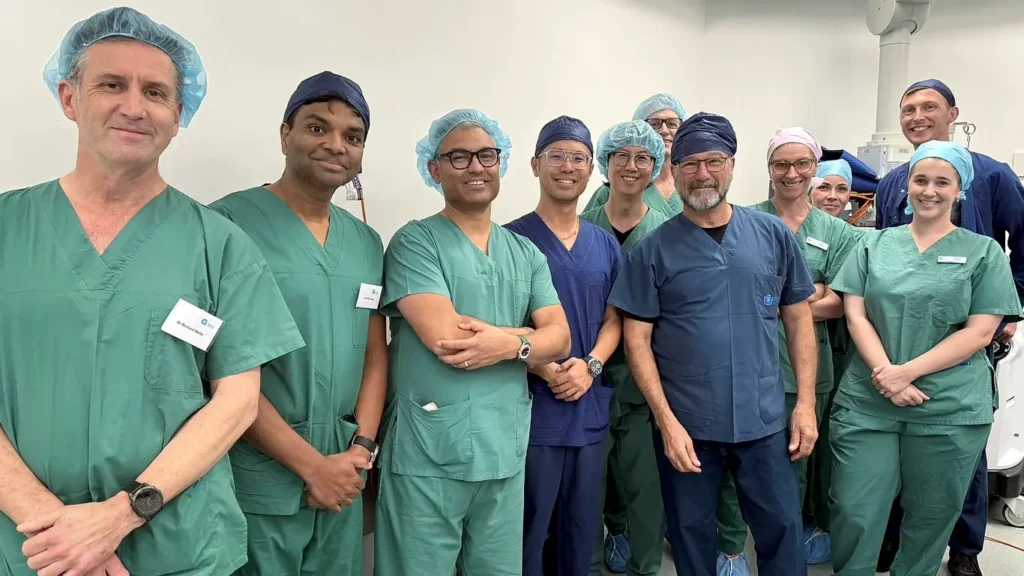
Professor Phillip Stricker conducted a series of training sessions at St Vincents Hospital in the use of Nanoknife.
Training Australian and New Zealand Urologists in Nanoknife Read More »
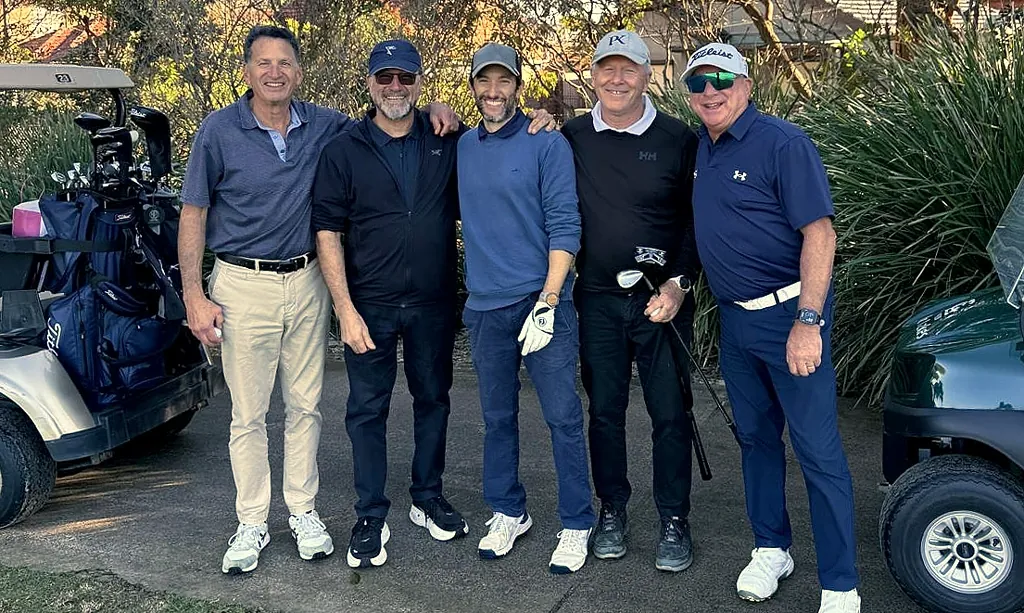
The St Vincent’s Prostate Cancer Research Centre is celebrating the outstanding success of its recent charity golf day.
Golf Day in Support of the SVPCRC Read More »
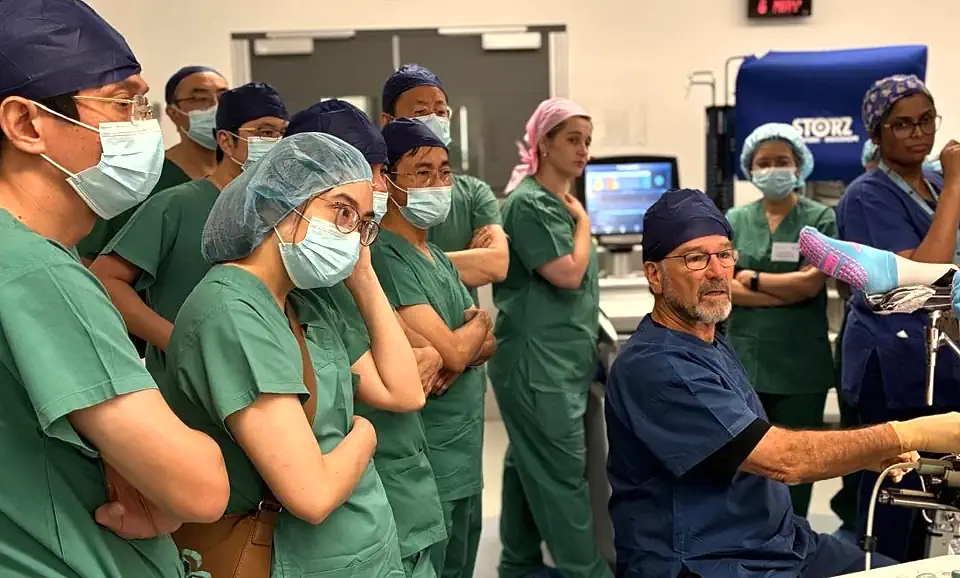
Professor Stricker performed the first two cases in NSW using St Vincent’s new Da Vinci Single Port Robot.
NanoKnife Training for Doctors from the Asia Pacific Region Read More »
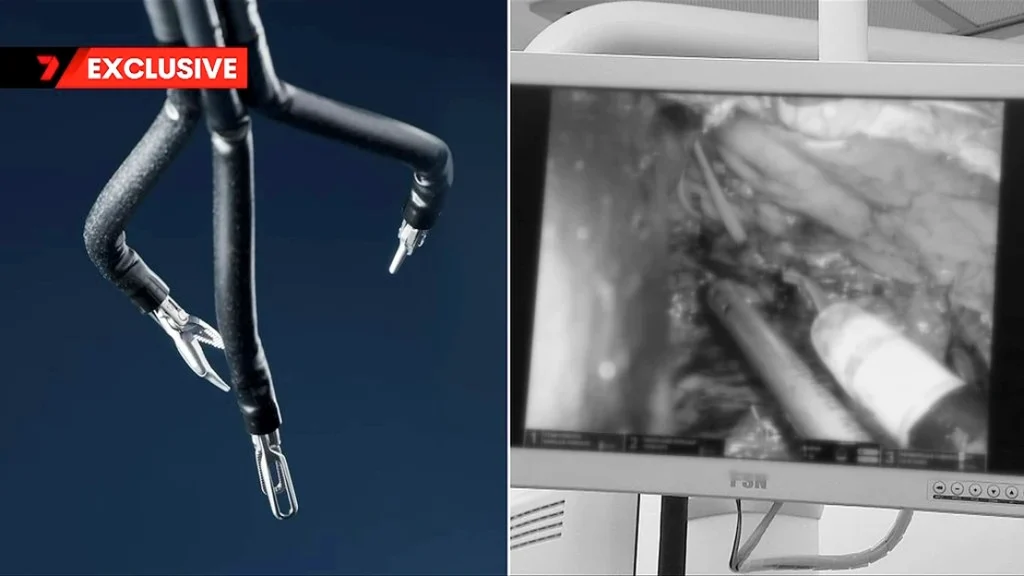
Jennifer Bechwati, National Health Editor for Channel 7, compiled a report on the Da Vinci Single Port surgical robot.
Channel 7 News Story On Single Port Robotic Surgery Read More »
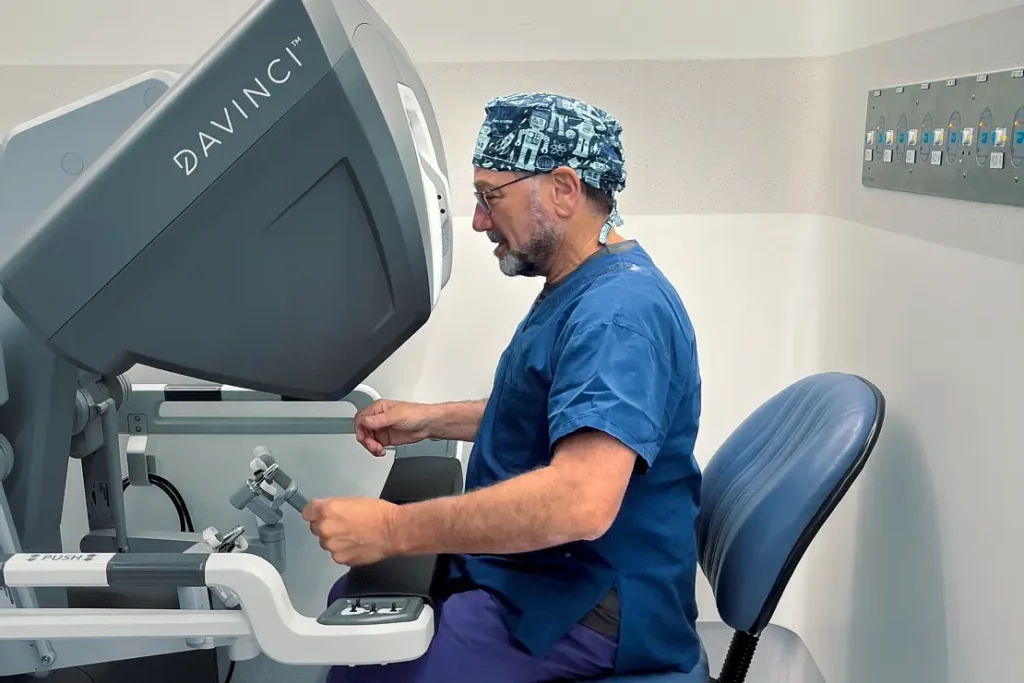
Professor Stricker performed the first two cases in NSW using St Vincent’s new Da Vinci Single Port Robot.
First Da Vinci Single Port Robot Surgeries Read More »
First and foremost I am a clinician and surgeon with a particular expertise and passion for the treatment of patients with prostate cancer and benign prostate conditions. I do this in three ways: firstly as your doctor or surgeon, secondly through the research I perform with my highly skilled team and thirdly by offering a comprehensive second opinion service. My
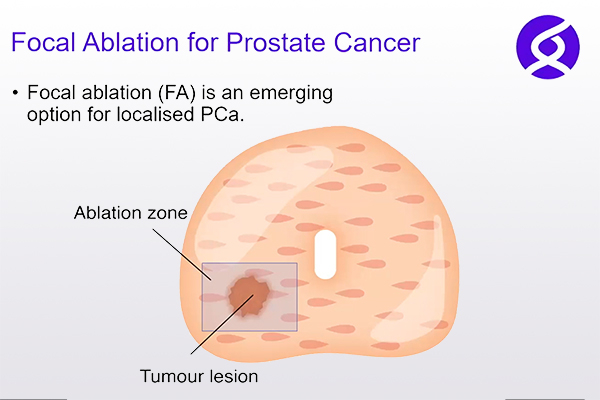
Prof Stricker presentaion on focal therapies at UCLA. Throughout October Prof Stricker was invited to give talks in America and Canada. At UCLA he presented a slideshow on focal therapies for prostate cancer with a deeper look at irreversible electroporation (IRE) and the NanoKnife procedure. The complete presentation can be seen here: Focal Therapies for
NanoKnife© IRE – UCLA Presentation Read More »
NanoKnife© IRE Results We have now treated 800 patients since February 2013. All patients have been meticulously followed up (100% follow up) with high-quality MRIs and biopsies, in addition to being offered validated quality of life questionnaires. Our current outcomes for focal irreversible electroporation in the primary setting (not after radiotherapy) is: Our Nanoknife publications can
Focal Irreversible Electroporation Read More »
Professor Stricker is currently the world’s most experienced focal nanoknife surgeon, having performed over 800 cases since 2013. He has modified and perfected his technique for select patients with prostate cancer. His nanoknife outcomes have been published in over 30 international peer reviewed papers. The most recent papers published in the British Journal of Urology International have
Nanoknife – Focal Irreversible Electroporation (IRE) Read More »
Focal therapy for selective patients with prostate cancer is a relatively new treatment for a select group of patients for the treatment of localised prostate cancer. The treatment is recommended for patients with localised prostate cancer stage T1 and T2 who are not candidates for prostatectomy because of their age, their general state of being
PSMA PET scanning is a relatively new diagnostic technology that greatly assists in localising the extent of prostate cancer. It can do this not only in the area of the prostate but also in the lymph glands and bones. As a result, therapy can be targeted more appropriately. PSMA PET/CT scanning is much more accurate
PSMA PET/CT Scanning Read More »
Recent developments in magnetic resonance imaging (MRI) have improved the ability of MRI to detect tumours, stage cancer and help in management decisions. They are also helping to more accurately target biopsies. What has changed in MRI imaging to make it so accurate? MRI has advanced recently so that not only can we look at
Multiparametric MRI Read More »
Cystoscopy is an endoscopic procedure where a tube is inserted into the urethra through the opening at the end of the penis. It allows me to visually examine the complete length of the urethra and the bladder for polyps, strictures, abnormal growths and other problems. Why is the test is performed? How does the test
Recently we reviewed a group of patients that I had treated between 1998 and 2000. We followed the patients up for a minimum of 10 years and compared it to a similar surgical series. Results were outstanding and in truth out-performed my surgical results in the very high-risk population by about 20% ( these results
High-dose rate brachytherapy Read More »